
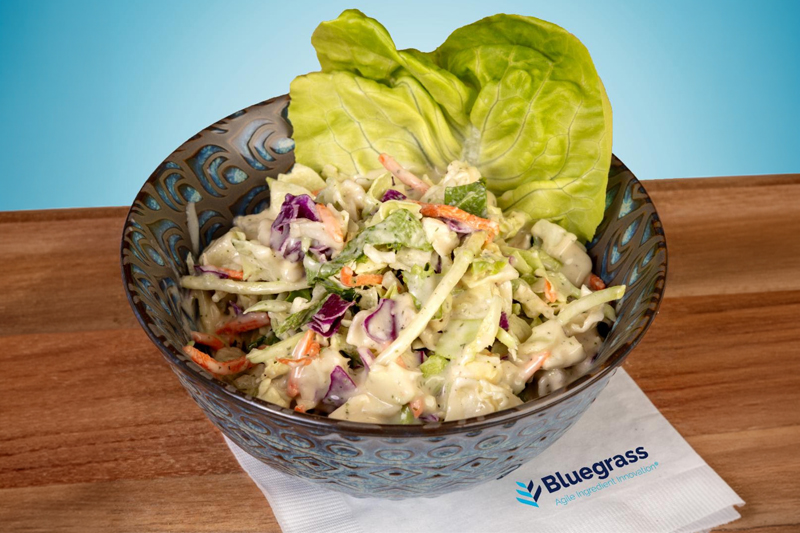
The numbers are hard to ignore. An estimated 12.4% of US adults are now on a GLP-1 medication, roughly double the share of 18 months ago, and industry analysts expect GLP-1 households to account for as much as 35% of US food and beverage sales by 2030. As GLP-1 medications reshape how millions of people eat, food and beverage companies have rushed to answer an obvious question: how do we get more protein, fibre, and other functional nutrition into every bite?
It's the right question, but it's not the only one that matters. Ask anyone actually using these medications, and a second, quieter demand comes through just as clearly: it still has to taste good.
That distinction is becoming one of the more important lessons emerging from the GLP-1 category, and it has implications that reach well beyond this one consumer group.
Taste is the basic sensation registered by the tongue: sweet, salty, sour, bitter, umami. Flavour is the fuller experience, built from taste combined with aroma and texture
A medication that changes how food tastes
GLP-1 medications don't just suppress appetite; they appear to change the sensory experience of eating itself. Consumers using these drugs frequently report that taste feels diminished overall, and some report that specific taste notes, sourness in particular, become more pronounced than before. For product developers, that's a meaningful formulation variable, not a footnote.
It also points to a distinction worth restating for anyone working in food science: taste and flavour are not the same thing. Taste is the basic sensation registered by the tongue: sweet, salty, sour, bitter, umami. Flavour is the fuller experience, built from taste combined with aroma and texture. When GLP-1 consumers say food doesn't taste like it used to, they may be describing a breakdown at either level, or both. Understanding which one is compromised, and for which ingredients, is foundational to solving for it.
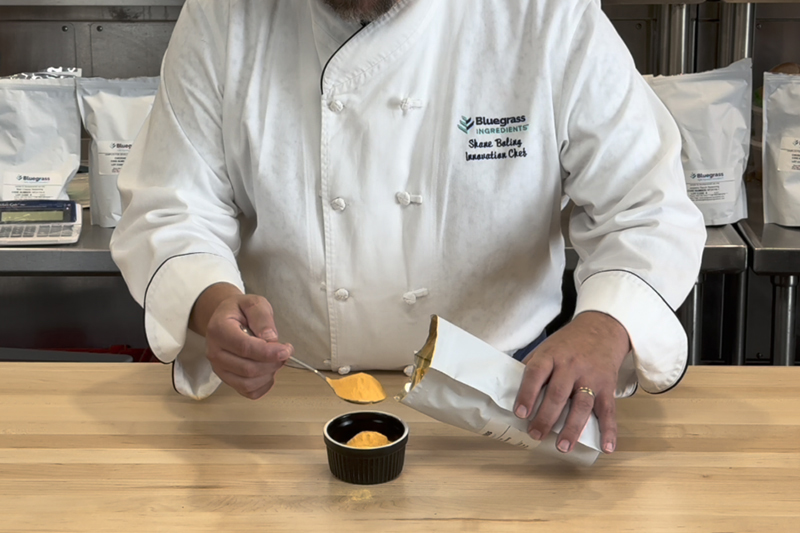
Small portions, high expectations
With fewer eating occasions in a day, each one has to be satisfying, not just functional.
The appetite-suppressing effect of GLP-1 medications is well documented, and its downstream effects on product development are significant. Some reports suggest daily caloric intake for GLP-1 users can fall to around 1,000 calories, consumed less frequently throughout the day. That combination (small portions, eaten infrequently) raises the stakes on every single eating occasion.
Social media has made this expectation explicit. GLP-1 users have been vocal about demanding satisfaction from the limited food they do consume: if someone is only eating a few times a day, and only small amounts at each sitting, that food needs to deliver. There's little tolerance for a bland or forgettable bite when it may be one of only two or three eating occasions in a day.
That's a higher bar than most nutrition-forward products have had to clear in the past. It's not enough for a product to be functional. It has to be worth the calories.
GLP-1 users have been vocal about demanding satisfaction from the limited food they do consume
The psychology behind the plate
Sensory response among GLP-1 consumers isn't fully mapped yet: diminished taste is the most consistent theme, but individual variation is still being understood. What is becoming clearer is that the psychological dimension of eating changes too.
GLP-1 medications are frequently described as reducing the mental noise around wanting to eat: the intrusive thoughts, cravings, and snack-seeking behaviour that many people struggle with. For food developers, that shift changes the job. If a product isn't competing against hunger anymore, it has to compete on its own merits: visual appeal, aroma, texture, and taste all have to work harder to earn a place in a smaller, more deliberate diet. It's a sharper version of a principle flavour developers already know well: consumers eat with their eyes before they ever taste a product, and that first impression carries even more weight when there are only a few eating occasions in a day to make it.
That psychology also lines up with a broader shift industry researchers have started calling "layers of delight": indulgence redefined not as a single hit of sugar or fat, but as a multidimensional experience where richness, complexity and better-for-you positioning all show up at once. GLP-1 consumers may be an extreme version of that expectation, but they're not inventing it.
At the same time, this consumer has become a more demanding label reader. Front-of-pack claims for protein and fibre are now table stakes. Increasingly, GLP-1 consumers are scrutinising full nutritional panels, micronutrients included, and expecting transparency that goes beyond the headline numbers. Packaging and labelling strategy is becoming as much a part of the product experience as the formulation itself.
The formulation challenge: fortification without compromise
None of this is entirely new territory for food science. The industry has faced fortification challenges before: adding functional nutrition to a product without wrecking its sensory profile is a long-standing R&D problem. What's different with GLP-1 formulations is the combination of a smaller margin for error (fewer eating occasions to win over the consumer) and a tighter ingredient palette (clean-label expectations).
Taste is only part of the equation. Texture and mouthfeel shift as fortification levels rise, too: added protein and fibre can thicken, dry out, or otherwise change how a product behaves in the mouth, independent of how it tastes. And the right flavour system isn't universal: a seasoning blend built for a shelf-stable snack won't necessarily perform the same way in a refrigerated beverage or a frozen entrée. Testing has to be application-specific, evaluating how a flavour or texture solution holds up through the product's actual manufacturing process, shelf life, and serving format, not just how it performs in a lab sample.
Texture and mouthfeel shift as fortification levels rise, too: added protein and fibre can thicken, dry out, or otherwise change how a product behaves in the mouth, independent of how it tastes
Protein fortification is a familiar culprit for off-notes. Different protein sources introduce different challenges: whey, pea, and other proteins each bring their own characteristic notes that can work against a clean, pleasant flavour profile at higher inclusion rates. Historically, the industry's answer was masking agents: additives engineered to interact with taste receptors and blunt those off-notes.
That toolkit is getting harder to use. As GLP-1 consumers read labels more closely, masking agents are increasingly viewed with suspicion, landing on the kind of ingredients-to-avoid lists that inform purchasing decisions for a label-literate audience. The result is a genuinely harder formulation problem: deliver the protein and fibre, avoid the off-notes, and do it with a clean label.
Solving that problem well requires close collaboration between R&D teams and ingredient suppliers, leaning on inherently clean-label ingredients that can offset off-notes through complementary flavour rather than through masking chemistry. It also means front- and back-of-package information has to keep pace with what this more sophisticated consumer expects to see.
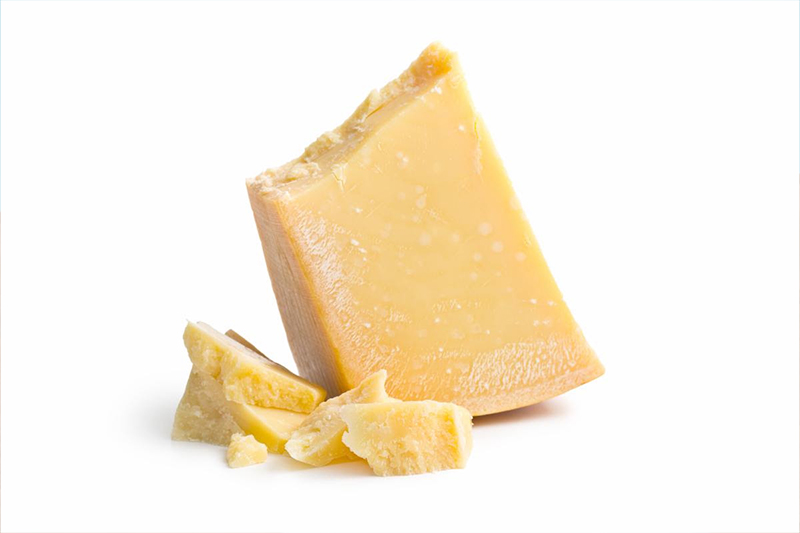
Blending multiple dairy notes (a Parmesan and Romano combination, for example) can intensify that effect further
Where real food ingredients can help
One category proving useful in this context is dairy, used not as a nutrition claim, but as a flavour-building tool. In flavour-performance terms, whey protein, a common base for high-protein formulations, can introduce a valley in the flavour curve: a cardboard-like off-note that becomes more noticeable at higher inclusion levels. Real dairy ingredients, such as cheese powders or dairy concentrates, can help counteract that. Seasonings compatibility with dairy is well established, and when a seasoning is married with dairy, the resulting flavour tends to settle into a more normal distribution curve rather than spiking or dipping at the edges. The result is the kind of flavour familiar from a glass of milk, butter on bread, or cream cheese on a bagel. Real dairy ingredients, like cheese powders and concentrates, can round out flavour profiles without relying on masking agents.
This works because it's addition, not correction. Rather than masking an unwanted flavour, dairy ingredients build a complementary, rounded flavour profile around it. Blending multiple dairy notes (a Parmesan and Romano combination, for example) can intensify that effect further, and layering in complementary spices or herbs adds another tool for offsetting off-notes without relying on masking agents.
It's a useful case study in a broader formulation principle: when fortification introduces sensory challenges (spikes or valleys in the flavour curve), look for ingredients that add pleasant flavour rather than ones that simply suppress an unwanted one. The distinction matters both for taste outcomes and for how the finished product reads on a clean label.
Where ingredient innovation is headed
This taste-first mindset is beginning to define which ingredient suppliers lead the category. At Bluegrass Ingredients, that's translated into a broad portfolio of dairy, citrus, and plant-based ingredient systems built around the principles of flavour, form, and function. That portfolio has kept Bluegrass Ingredients ahead of GLP-1-driven reformulation trends, with R&D organised around four dedicated focus areas: bold cheese flavour systems for nutrient-dense formats, cultured-dairy umami enhancement, globally-inspired seasoning systems, and flavour-forward solutions for protein and fibre-fortified applications. All four are built to perform in smaller, nutrient-dense portions. The approach relies on natural fermentation and enzymolysis processes rather than synthetic masking agents, positioning Bluegrass Ingredients at the forefront of the clean-label shift reshaping the category.
It's a useful signal for where the category is headed: as GLP-1-driven reformulation matures, the ingredient suppliers gaining traction won't be the ones simply supplying more protein or fibre. They'll be the ones solving the flavour problem that fortification creates in the first place, and suppliers like Bluegrass Ingredients that treat flavour science as a primary R&D focus, rather than an afterthought, are best positioned to lead that shift.
Shopper research suggests GLP-1 use is training a broader population to eat more intentionally
The broader lesson for food development
The GLP-1 conversation is, in many ways, a sharpened version of a challenge the food industry already knows well: consumers across every generation and demographic want food that is nutritious, convenient, and satisfying, and they are increasingly unwilling to trade one for another. GLP-1 consumers simply make that demand impossible to ignore, because the stakes of a single unsatisfying bite are higher when there are fewer bites in a day. Nutrition and taste were never separate problems, and solving for one without the other leaves food unfinished.
It's also worth noting that this shift likely outlasts the medications themselves. Even consumers who cycle off GLP-1 drugs, or who never start them, are increasingly gravitating towards smaller, more deliberate portions and higher expectations per bite. Shopper research suggests GLP-1 use is training a broader population to eat more intentionally, which means the formulation lessons developers learn here won't be confined to a single medication category for long.
Meeting that demand requires food scientists, ingredient suppliers, packaging specialists, and manufacturing teams to work in concert, balancing cost, process capability, nutritional performance, and the full sensory experience, from shelf appeal through the last bite. That's a tall order, but it's also familiar ground for an industry that has spent decades adapting to shifting consumer priorities.
The takeaway for product developers isn't that GLP-1 consumers are an entirely new puzzle. It's a reminder that fortification and flavour were never separate problems to begin with, and that no amount of protein or fibre on the label will make up for a product that doesn't deliver on taste. Whatever the target consumer (GLP-1 users, Gen Z, Boomers, or anyone in between), that fundamental hasn't changed.


