
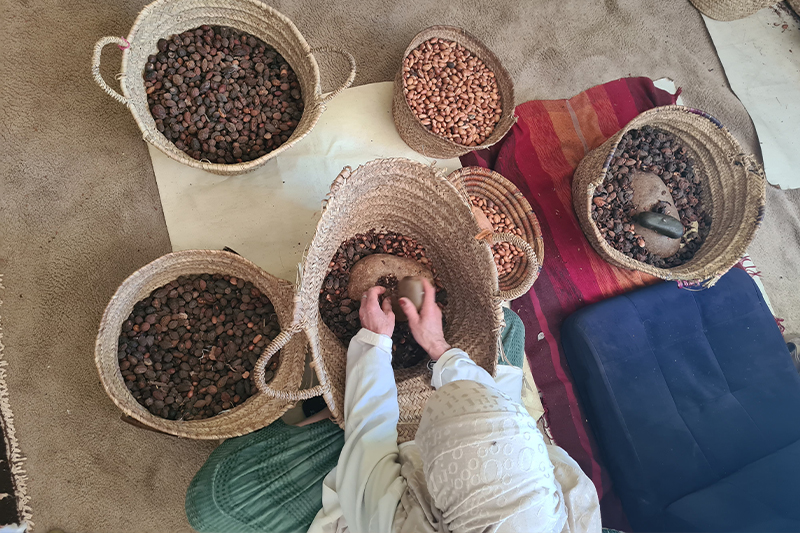
A new framework designed to keep wild-harvested plants in commercial supply and out of danger has been launched by TRAFFIC in partnership with British conservation consultancy Biodiversify.
The Wild Harvest Improvement Project (WHIP) Framework is a step-by-step plan to help local communities and the companies buying from them make the harvesting of wild plants more sustainable.
The framework was developed through a partnership including TRAFFIC, the Global Diversity Foundation (GDF), Biodiversify, MBLA and FairWild, and funded by the UK Government through the Darwin Initiative. It has already been piloted in Morocco, on argan kernels, and in Uzbekistan, on liquorice roots, demonstrating its potential to support community-led governance and equitable trade.
Wild-harvested plants are staples of global daily life, yet many of the species behind them face extinction through overharvesting, habitat loss and climate change.
Ingredients found in kitchen cupboards and medicine cabinets such as liquorice, argan oil or frankincense are gathered from the wild, and without intervention risk being harvested until they disappear. That outcome would be devastating for the millions of people who depend on harvesting for their income.
Cara Flowers, Sustainable Supply Chain Manager at TRAFFIC, said: “Sustainability in wild harvesting is not achieved by walking away from these supply chains. The people who know these species best are the people harvesting them, and they need a route that recognises the progress they are already making.
A WHIP ensures these species remain a critical part of their ecosystems while helping the people who harvest them earn a dignified living. That is a commercial argument as much as a conservation one.
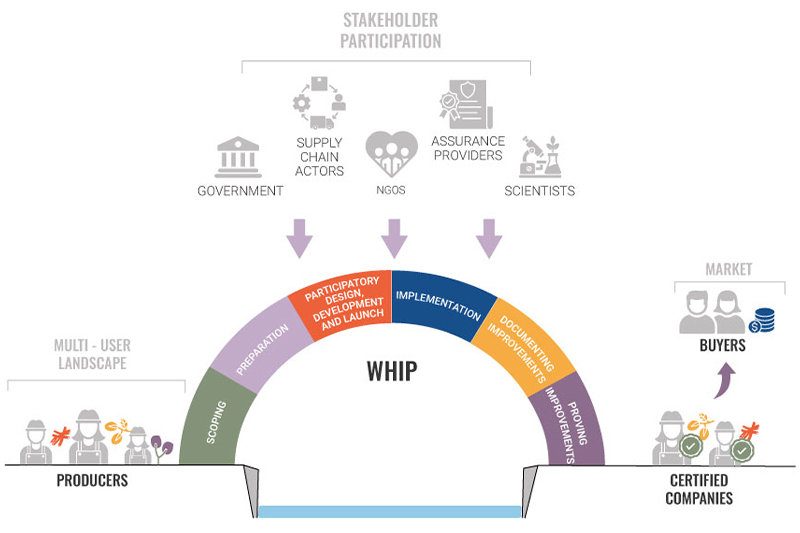
WHIP is designed as a bridge for those who want to protect nature but are currently hindered by high costs, low visibility or a lack of market incentives. Rather than treating certification as all-or-nothing, it offers a flexible action plan that allows producers and companies to make measurable improvements over time until they are ready for full sustainability certification.
The framework works by bringing together everyone involved, including harvesters, governments, NGOs and the companies buying the ingredients, to agree shared goals, then using a gradual work plan to address specific challenges such as biodiversity loss or unfair working conditions. Participants must publicly declare their involvement and provide evidence of improvement, so progress can be checked rather than assumed.
Caitlin Schindler, Principal Consultant at Biodiversify, said: “Every business both depends on nature and affects it, and each has a chance to help protect it in ways that also reduce their own long-term risk. The ingredients companies know least about are often the ones they are most exposed to. What makes WHIP different is that it gives a company a credible first step instead of an unreachable standard. Having spent years working on the realities of wild-harvested plant supply chains, I have seen how often companies want to act but have no practical route in. WHIP gives them one.”
The launch comes as global businesses face increasing obligations under the Kunming-Montreal Global Biodiversity Framework (GBF) to halt and reverse biodiversity loss by 2030.


